Experiments · Modeling · Machine learning
Research
Acoustic sensing of flow condensation
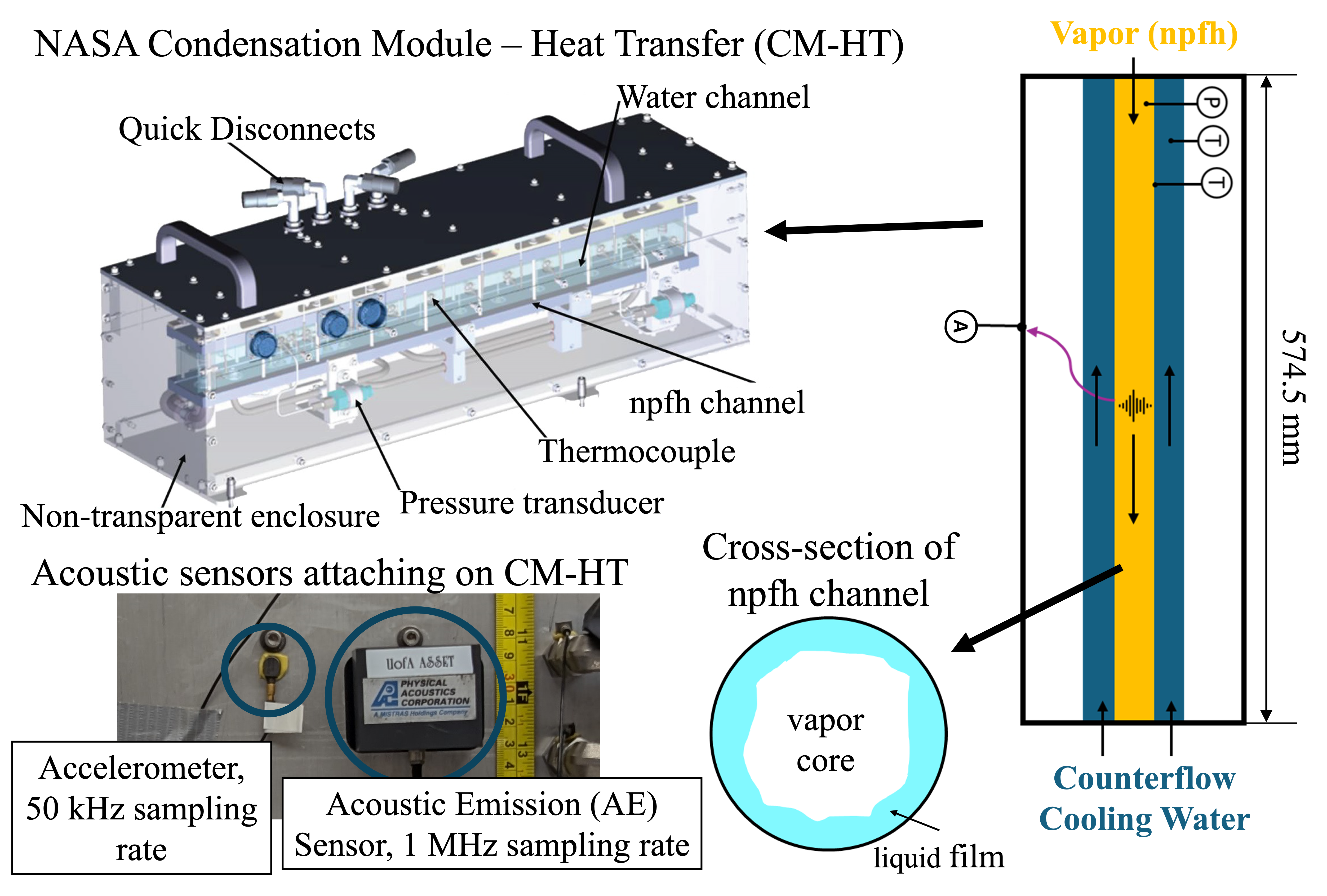
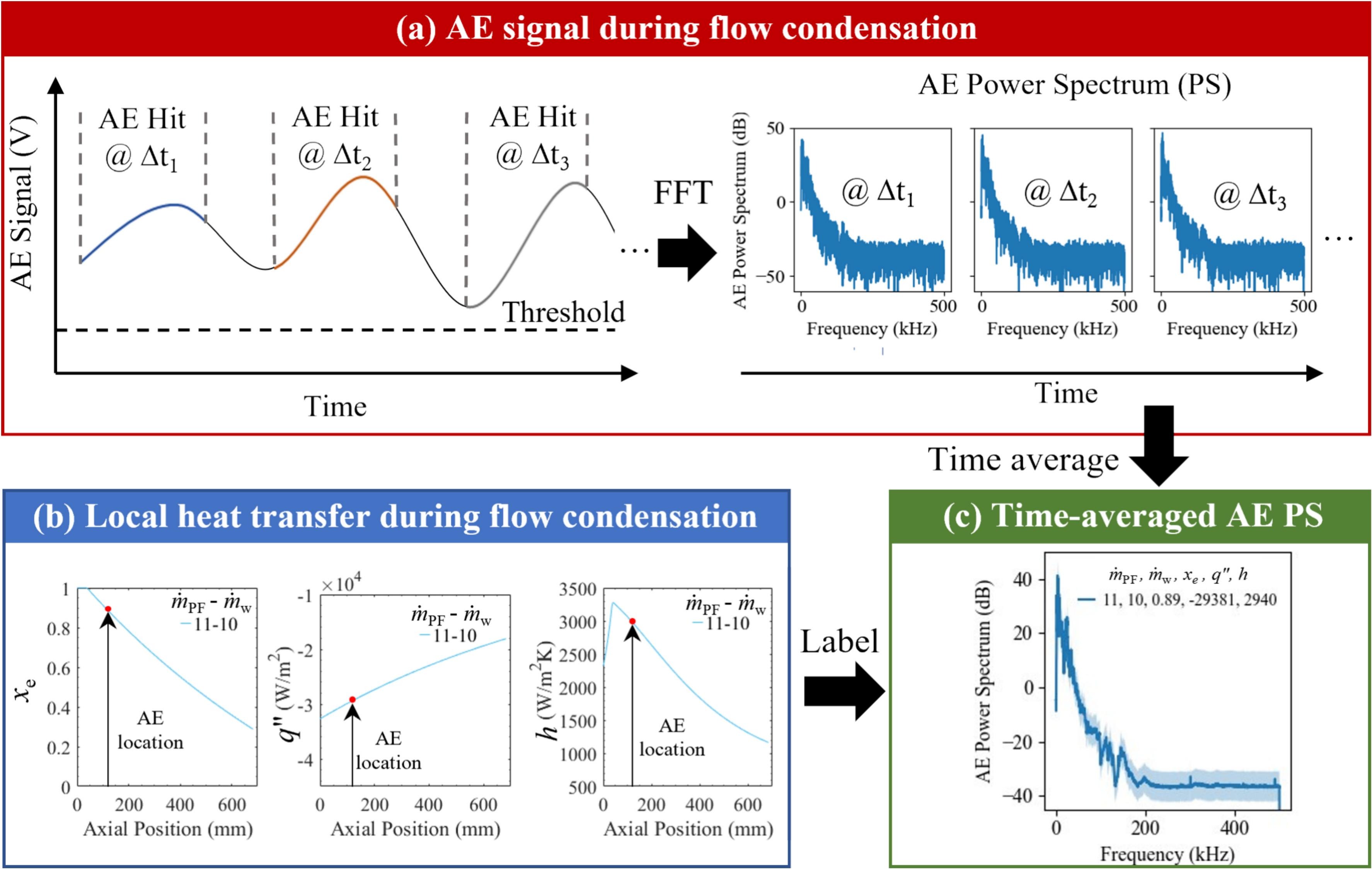
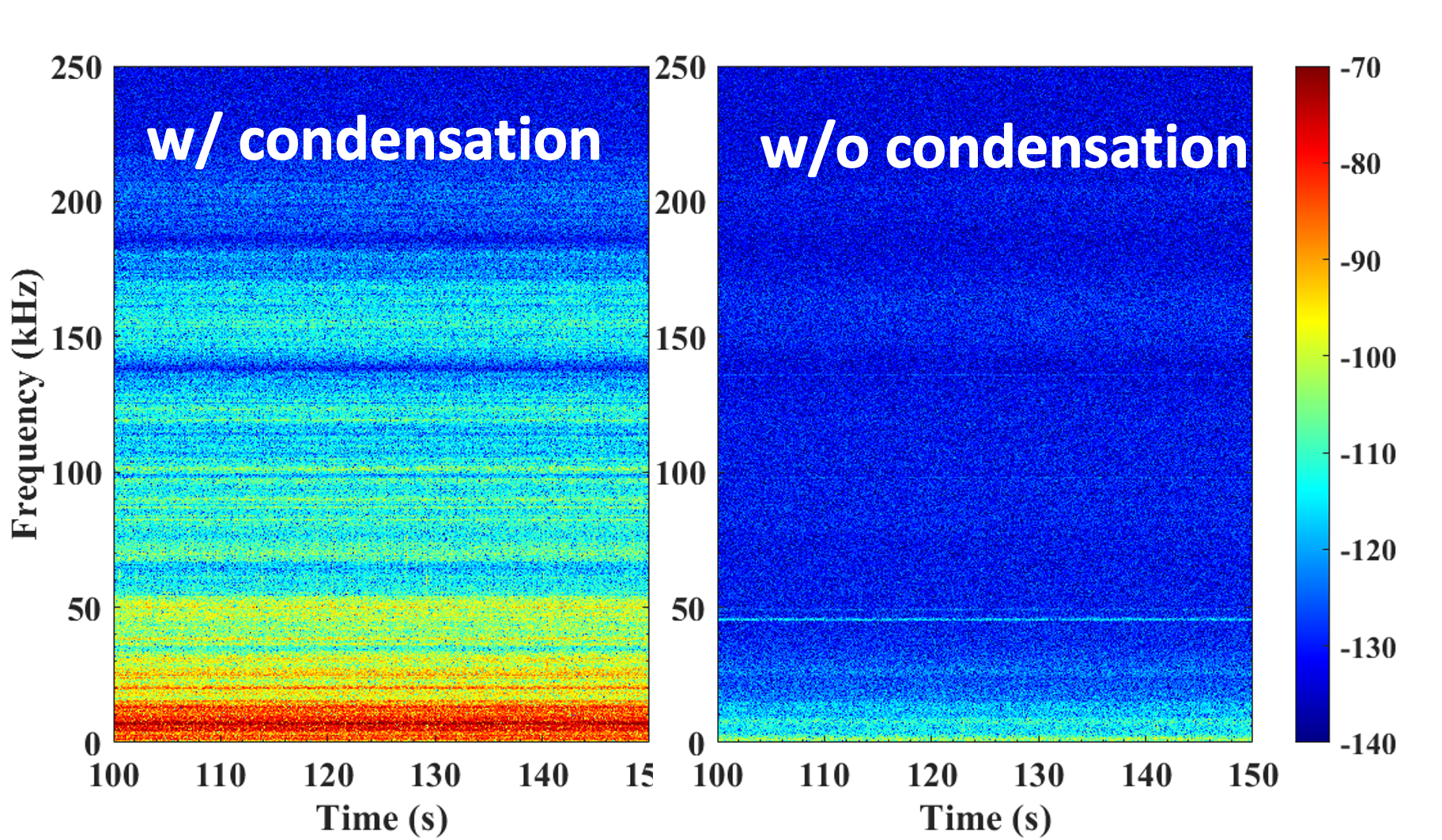
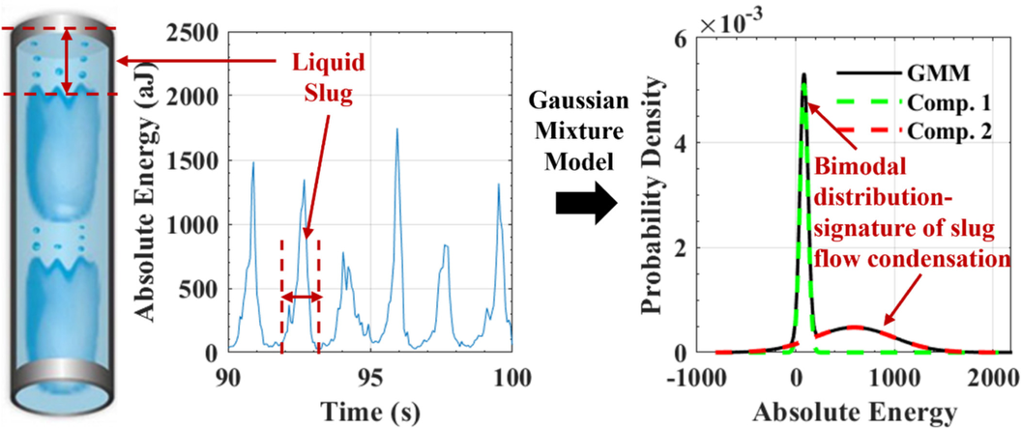
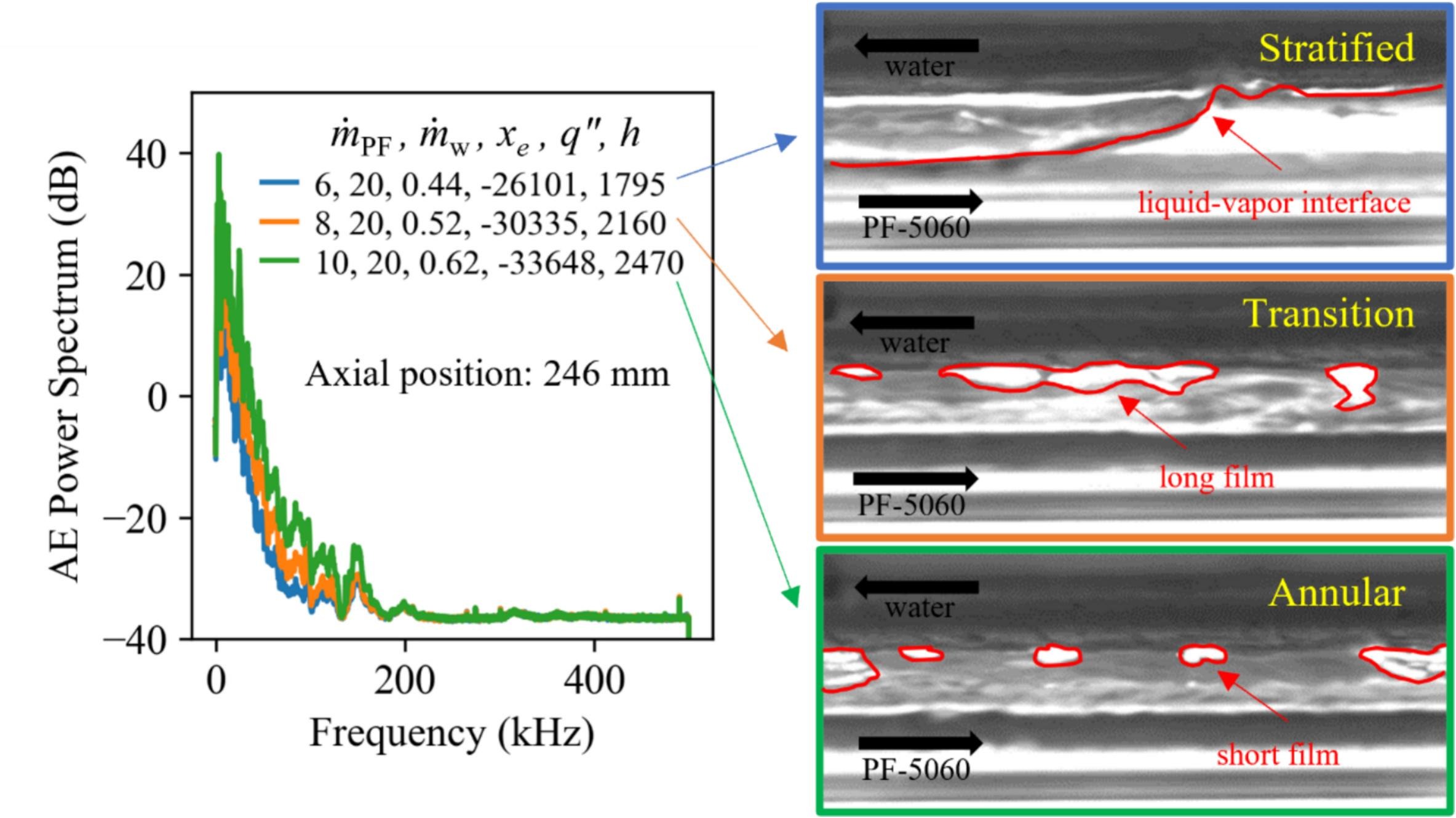
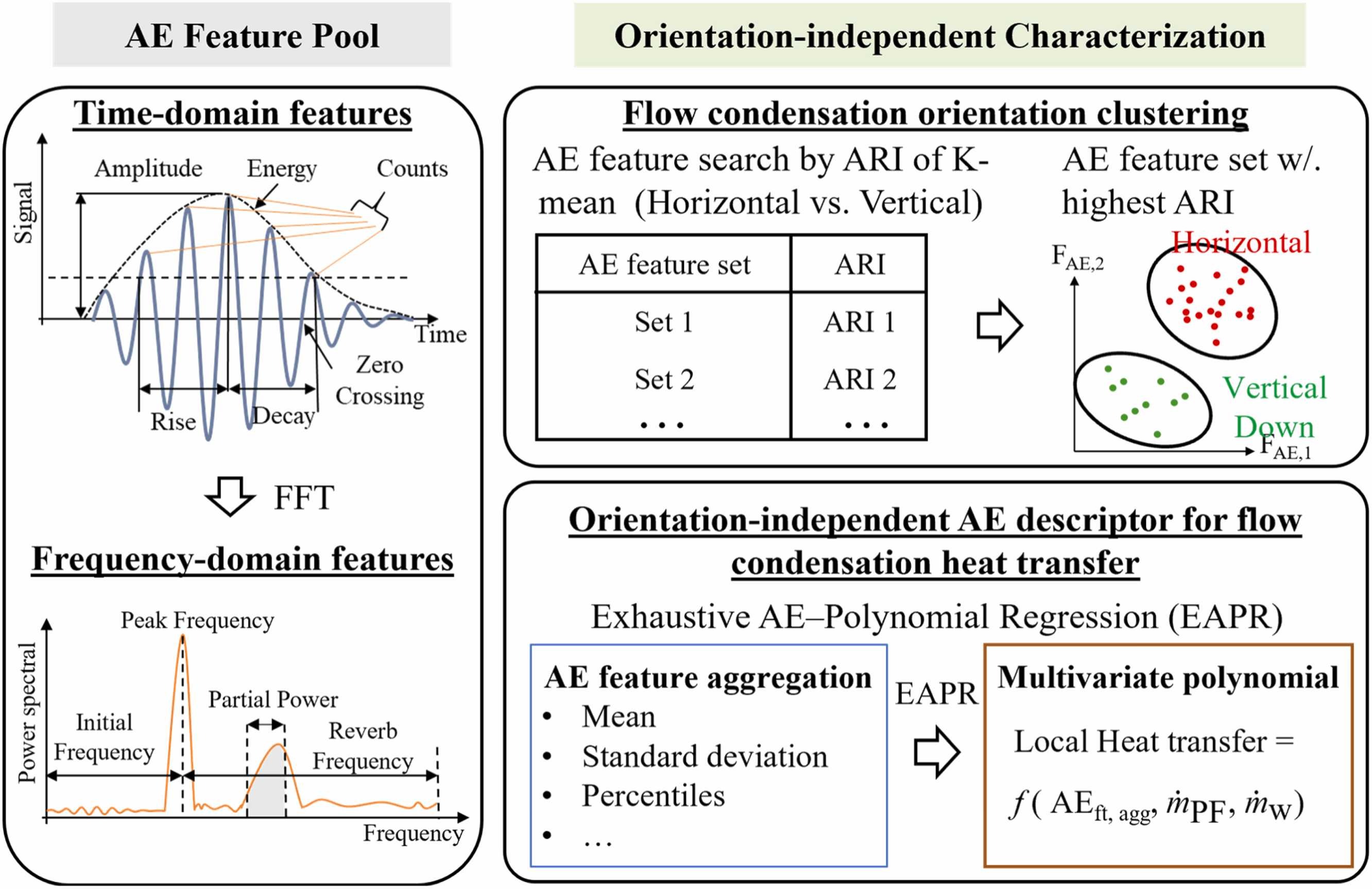
Flow condensation enables efficient heat removal, but its complex interfacial dynamics and corresponding heat transfer are difficult to characterize when optical access and conventional measurements are limited. This work develops an integrated framework for non-intrusive monitoring of flow condensation by combining acoustic emission sensing, signal analysis, and machine learning. Externally mounted sensors capture acoustic signatures of phase change and interfacial dynamics, enabling flow regime identification and quantitative prediction of local vapor quality, heat flux, and heat transfer coefficients. Across steady and transient conditions in horizontal and vertical configurations, the framework connects acoustic measurements with thermal performance, including reconstruction and forecasting with uncertainty estimates, establishing a foundation for real-time diagnostics without optical access or intrusive probes.
Thermal Energy Storage
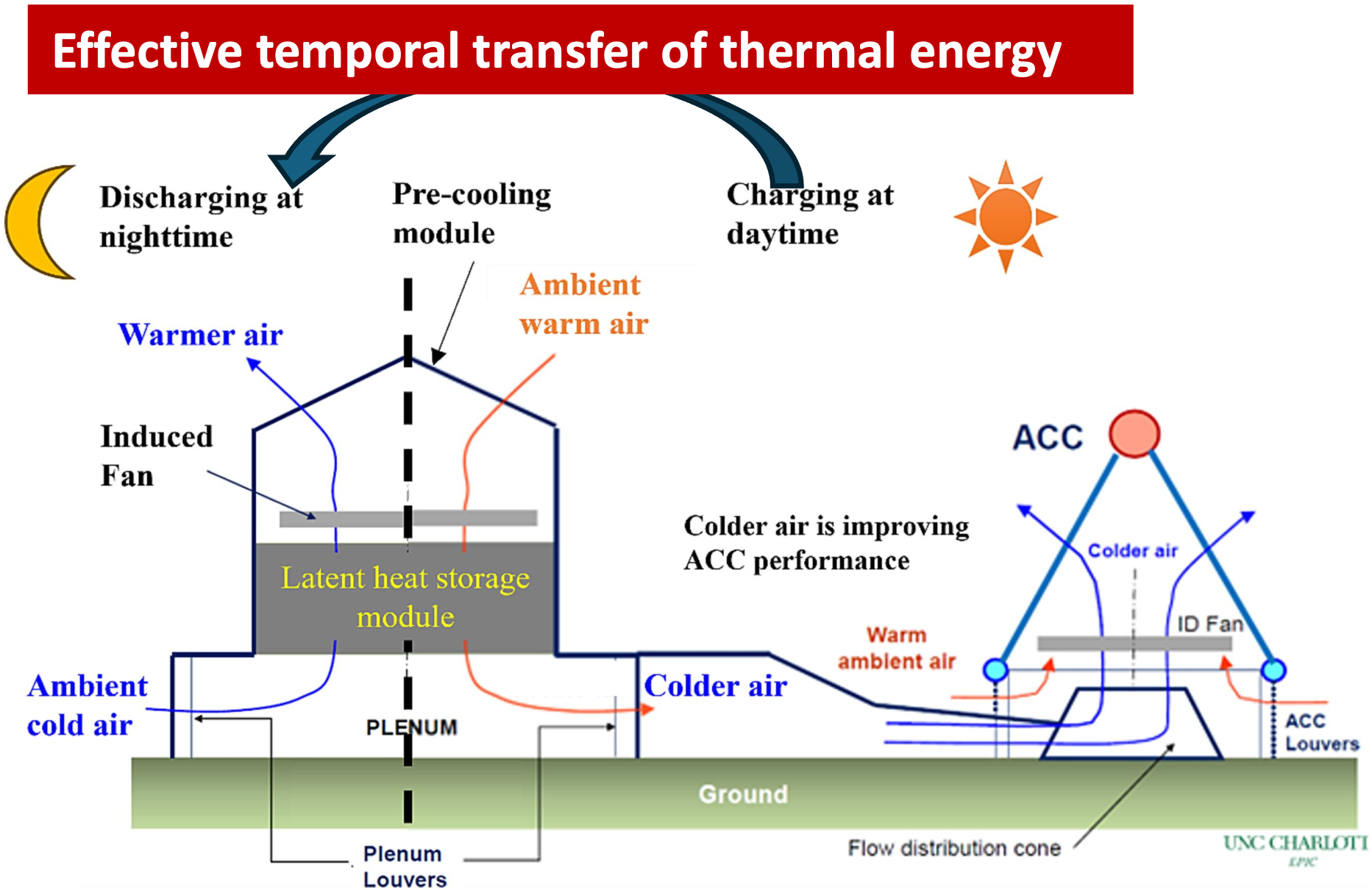
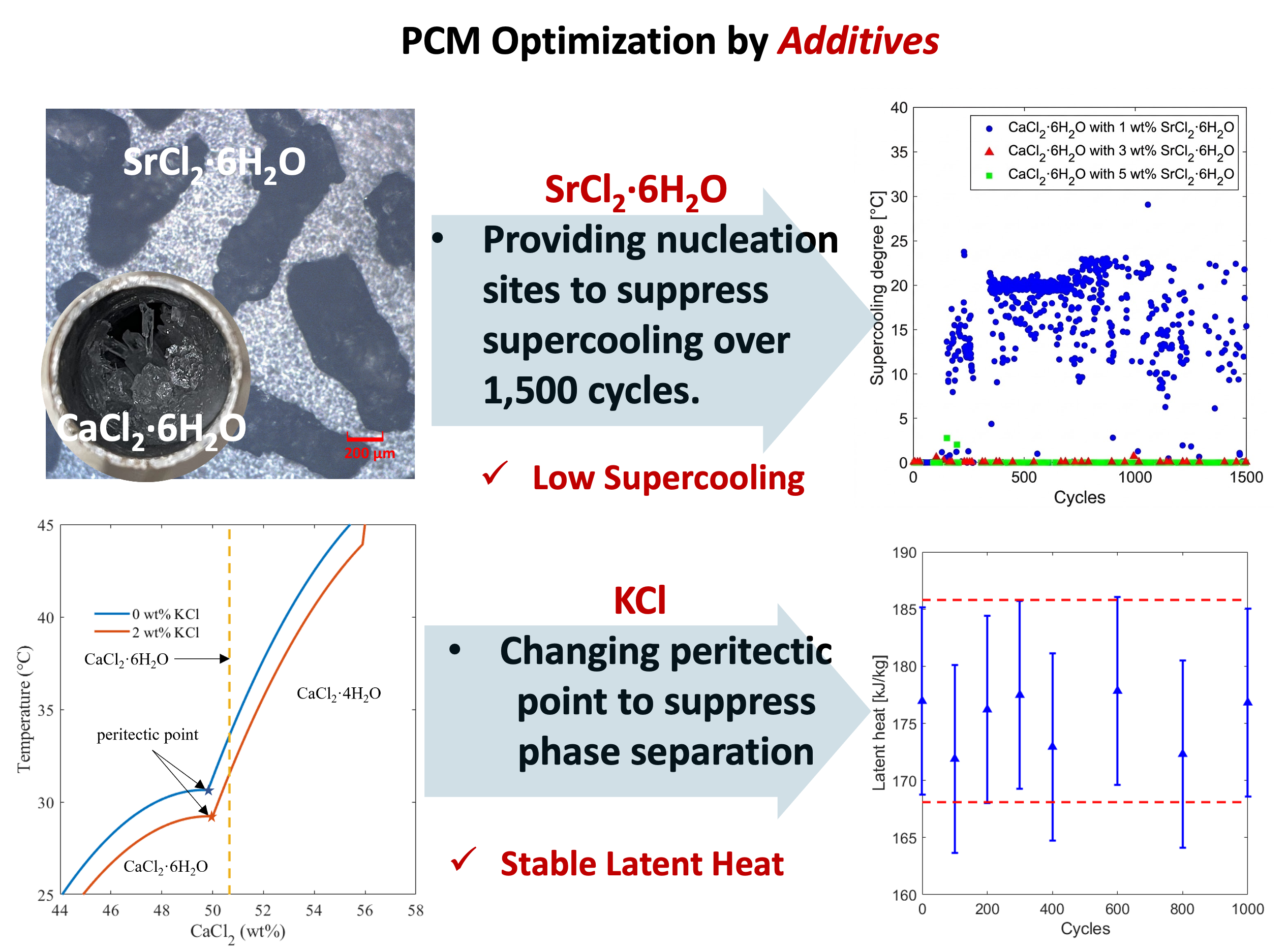
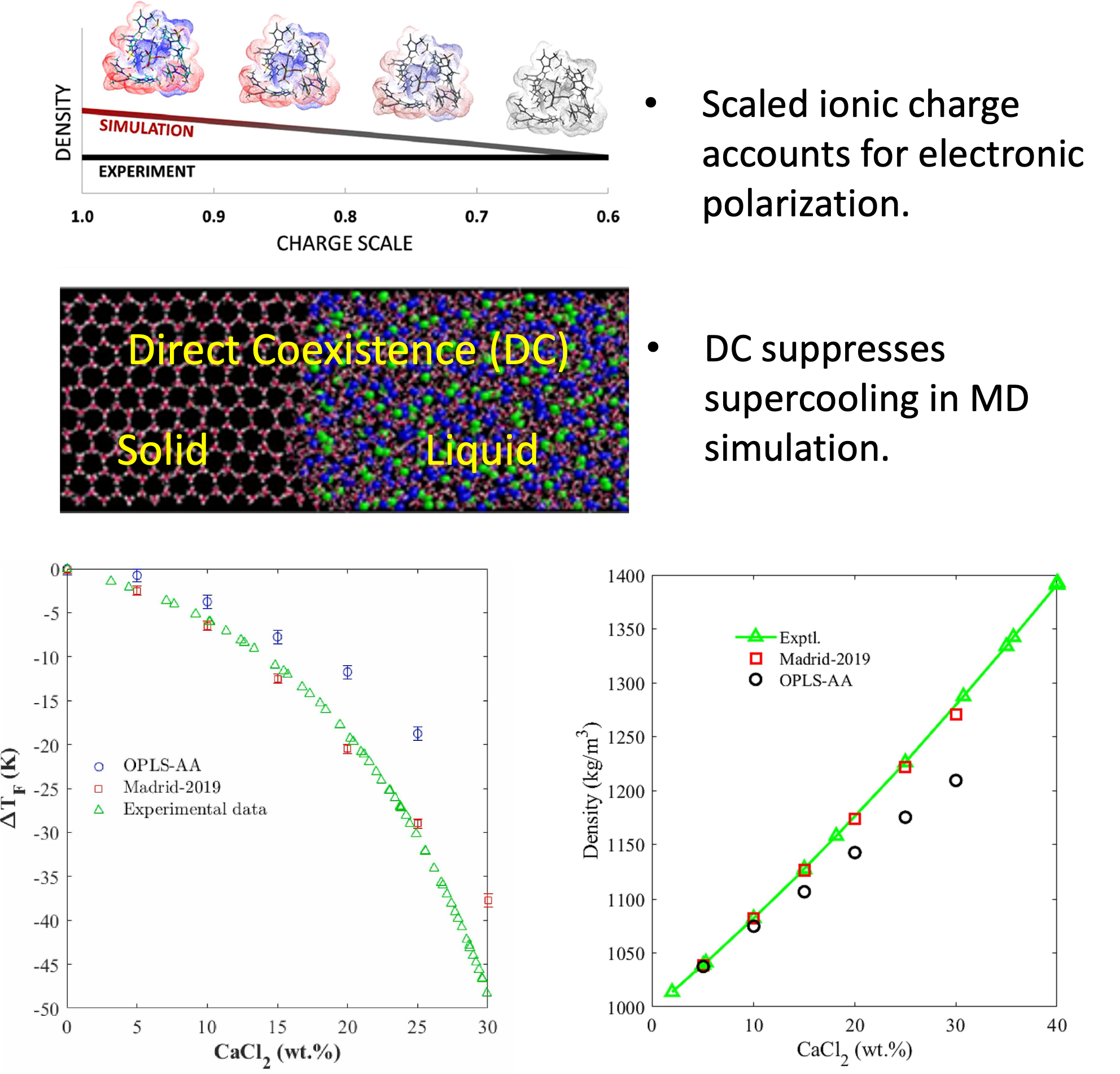
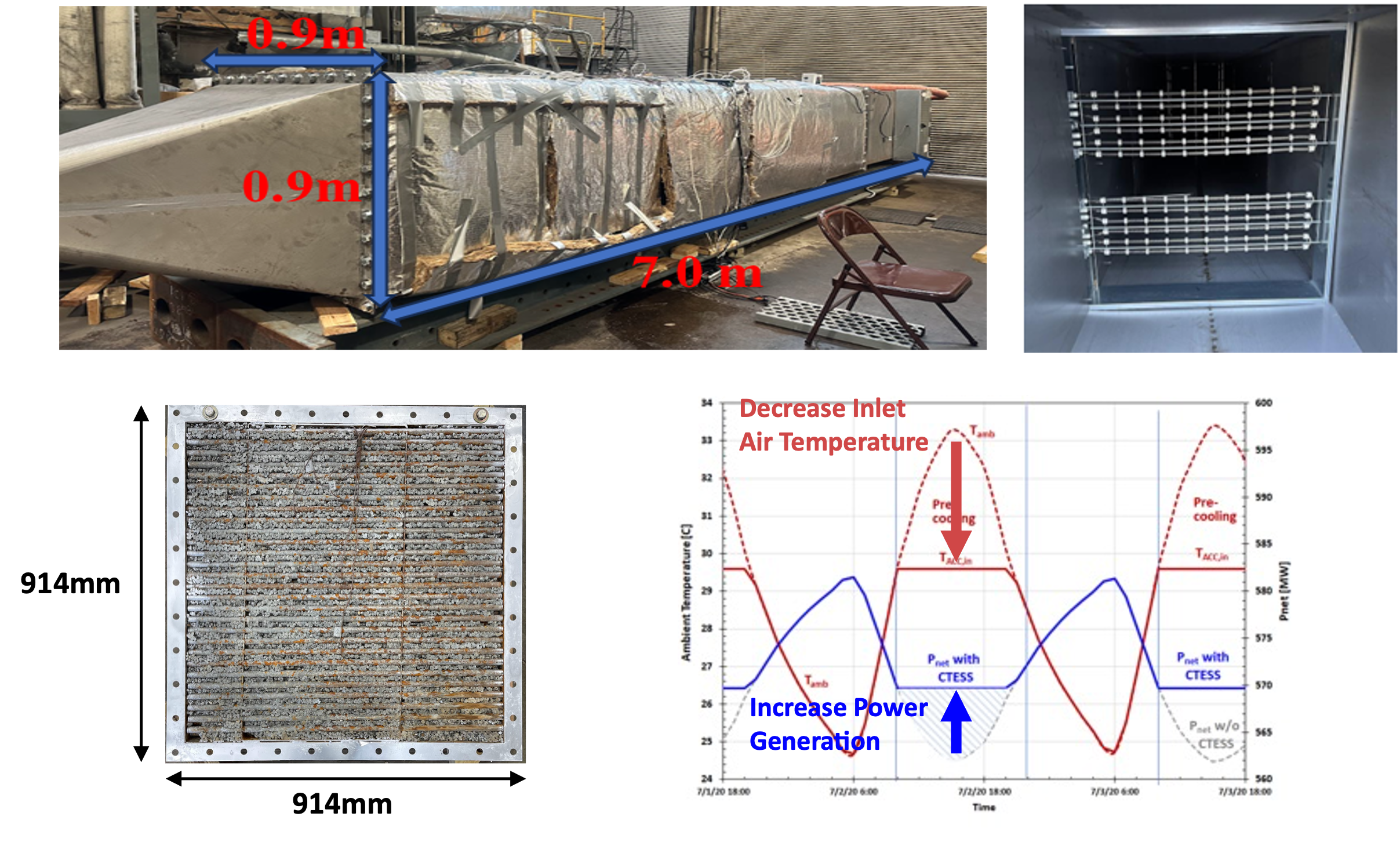
Dry cooling reduces water consumption in power plants, but its performance declines during hot weather when cooling is most needed. This work explores latent heat enhanced dry cooling to improve cooling performance without additional water consumption. The approach uses salt hydrate phase change materials to store cooling capacity from nighttime air and pre-cool incoming air during the day. Combining molecular dynamics simulations with material development and experimental testing, the project investigates phase change behavior, improves material stability, and integrates encapsulated thermal storage materials into pervious concrete and metal tube modules. Laboratory and prototype evaluations demonstrate sustained air cooling, highlighting the potential of latent heat storage to support more efficient and water-conscious power generation.
Solid-Gas Multiphase Flow
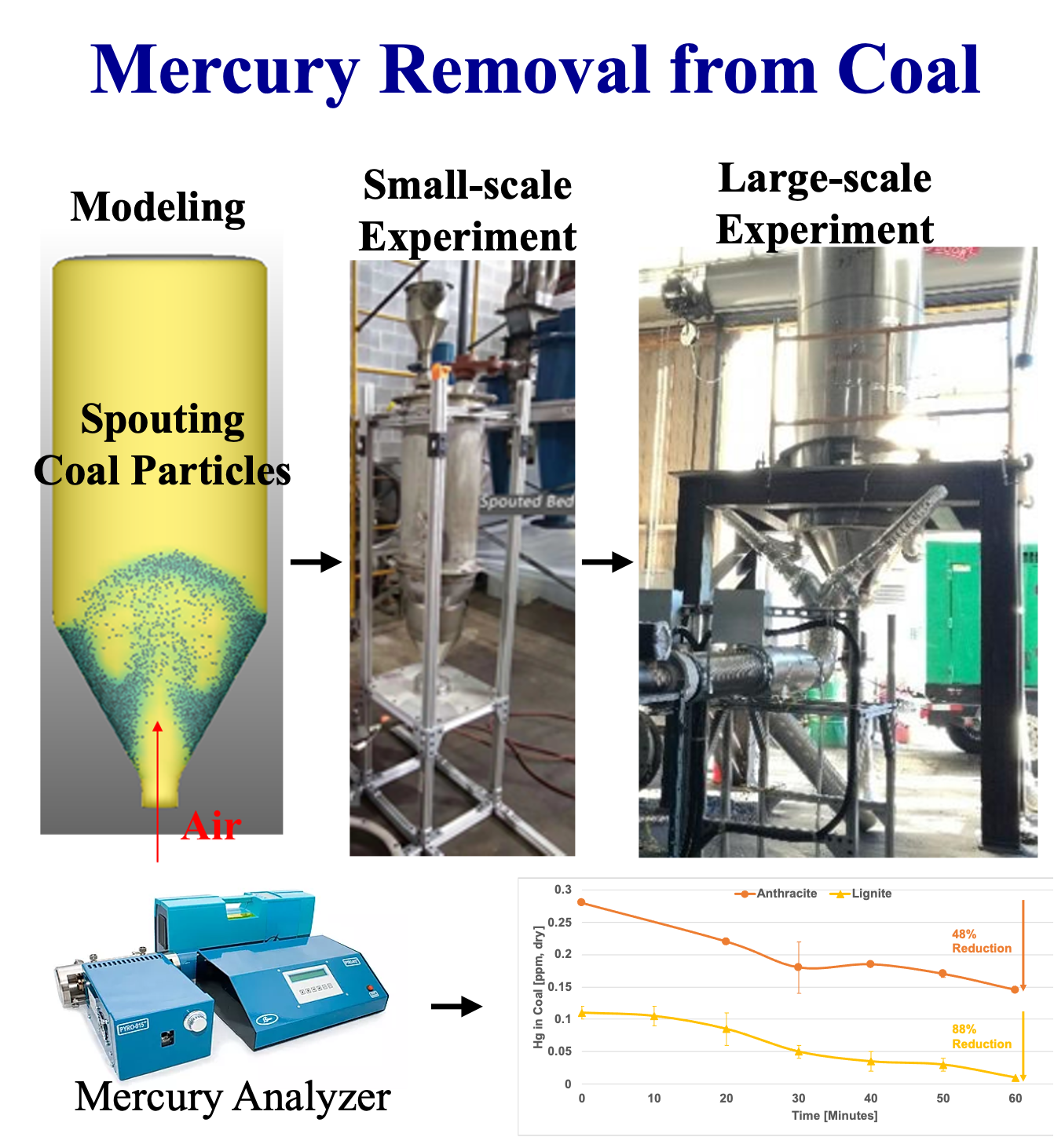
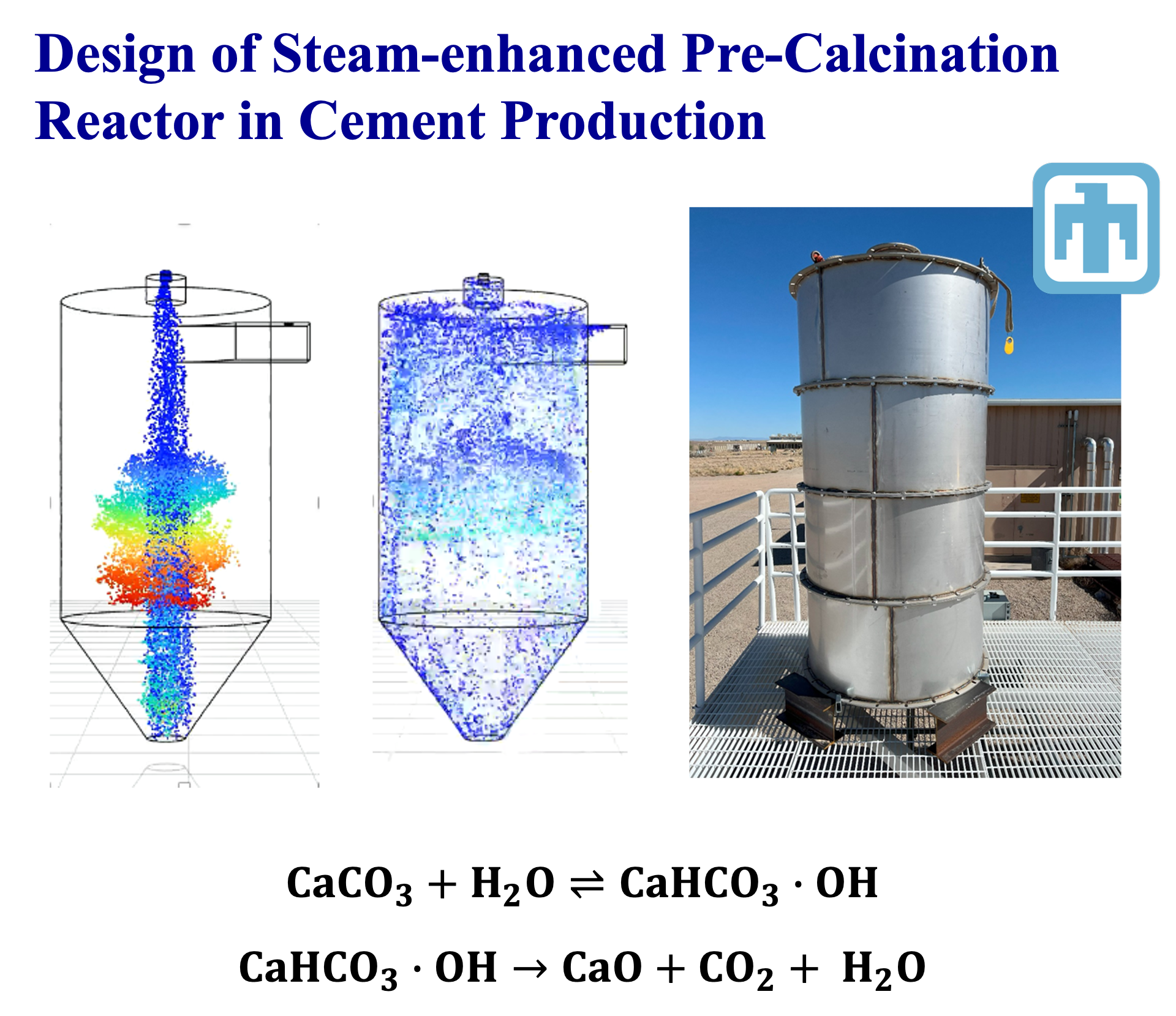
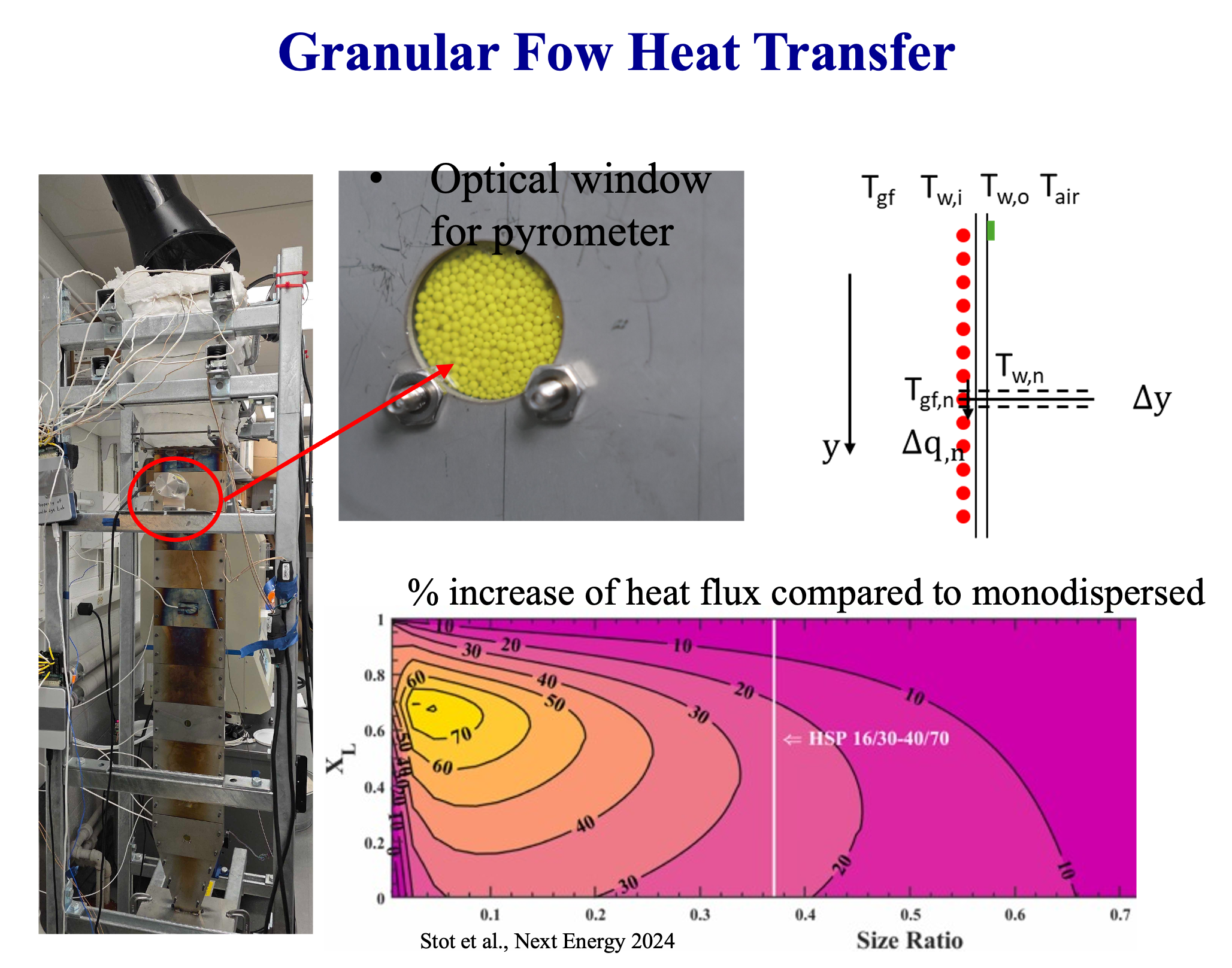
Heat and mass transfer between solid particles and gases governs the performance of many energy and industrial processes. This research track combines experimental measurements and numerical modeling to understand how particle motion, gas flow, and reactor geometry influence transport and reaction. The work spans spouted-bed processing for mercury removal from coal, steam-enhanced pre-calcination reactor design for cement production, and heat transfer in flowing granular materials. By connecting particle-scale transport with reactor-scale behavior, these studies examine how particle circulation, residence time, and size distribution can guide the design of more efficient thermal and chemical processes.